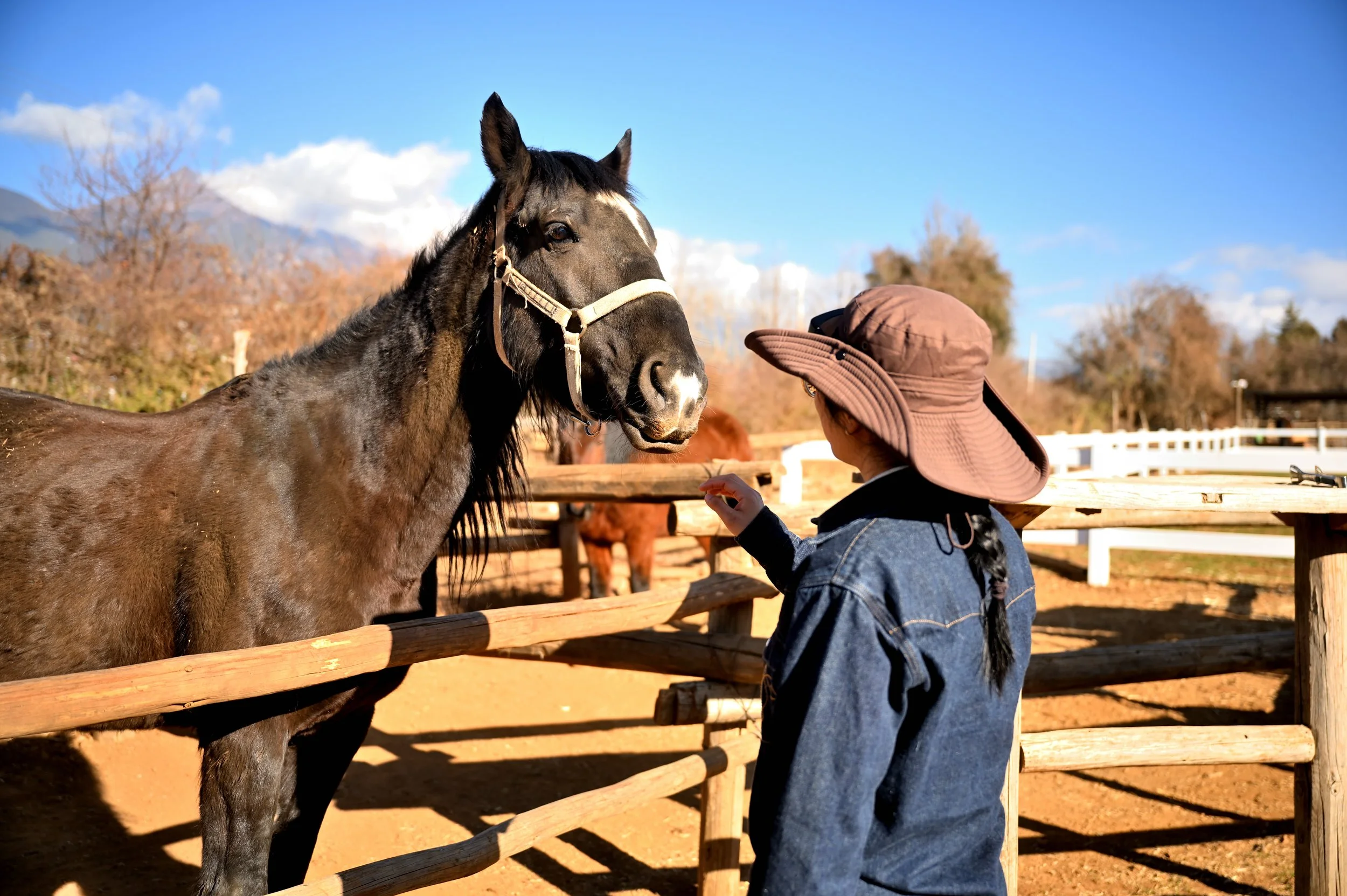
Respect begins at the boundary. By approaching from outside the fence, we allow the horse to observe us on their own terms—curious, unpressured, and free to choose engagement.
Your first time with a horse can be exciting, overwhelming, and unforgettable—often all at once. You may feel a flutter of nerves, a rush of curiosity, or perhaps a quiet sense of awe.
All of these feelings are welcome.
This guide is designed to help you navigate those first moments with confidence and respect. It is not about control. It is about communication. And like any conversation, it begins before you mount.
The One Rule That Matters Most
At Rangeland, we believe that horses are companions, not tools. They are sentient beings with rich emotional lives. When you approach a horse, you are not approaching a machine or a vehicle. You are approaching another living being who has its own personality, its own preferences, and its own way of communicating.
A safe and respectful experience begins with this understanding. From that foundation, everything else follows.
How to Approach a Horse
Approaching a horse is not about asserting dominance. It is about earning trust. Here is how to begin.
Step 1: Be Present, But Quiet
Do not interrupt the herd or rush toward the horse. Stand at a respectful distance and allow the horse to notice you. Horses are naturally curious. If you are calm and patient, many will approach you of their own accord. A horse that approaches of its own free will is a horse that has chosen to engage. That choice, however small, is the foundation of everything that follows.
Step 2: Allow Time
Do not rush. A horse needs time to get used to your presence. Every horse is different: some are bold and curious; others are cautious and reserved. Give them the space to decide when they are ready. If a horse moves away or seems uninterested, respect that. You can try again later.
Step 3: Use a Gentle Approach
Once the horse has relaxed around you, you can begin to interact. Here is how to do it gently:
Offer your hand. Hold your hand out with a flat palm, close to the horse's nose. This invites the horse to smell you—it is how horses learn about the world.
Start with the shoulder. Soft, slow strokes on the shoulder blades or neck are a good place to begin. Avoid reaching for sensitive areas like the ears, the face, or the hindquarters.
Move slowly. Sudden movements can startle a horse. Let your touch be a question, not a demand.
Watch for signals. If the horse pulls away, pins its ears, or tenses up, it is telling you to give it space. Listen.
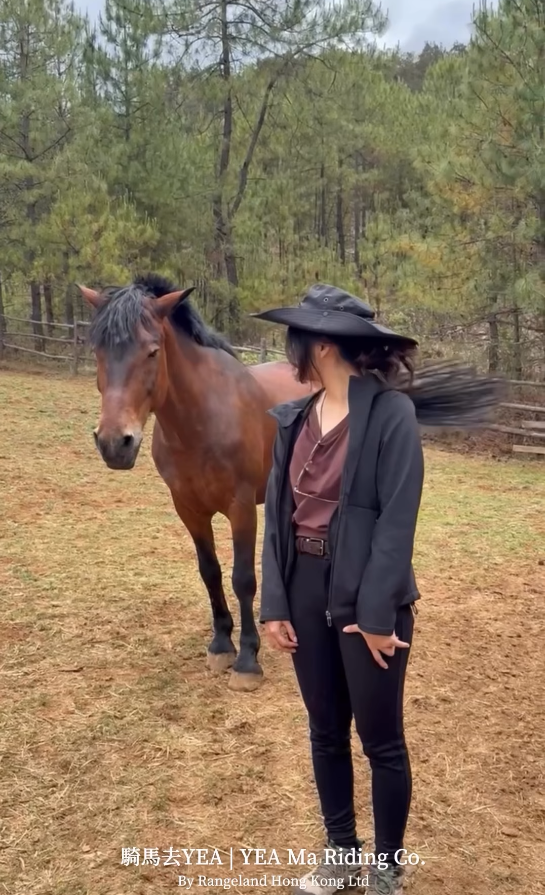
Watch: A gentle approach in action. In this short demonstration, we show how to offer your hand, read the horse's response, and build trust—step by step.
If This Is Your First Ride: Essential Tips
For those who are new to horses, here are some essential points to remember before and during your ride.
Ask Questions Before You Mount
Your handler or instructor knows the horse you are about to ride. Before you get on, ask:
What signals and commands does this horse respond to? (e.g., sound cues, leg pressure, rein contact)
How do I stop and steer?
What should I do if I feel nervous or lose balance?
Are there any specific behaviors I should watch for with this horse?
A well-trained horse follows clear and consistent signals. The more you understand the language of your horse, the better your communication will be—and the safer you will feel.
Avoid Harsh Handling
Abrupt and harsh pulling, kicking, or shouting will only frighten or annoy your horse. It is not a demonstration of authority; it is a breakdown of communication. Remember that a horse is not a machine that responds to force. It is a living being that responds to clarity and calm. If you feel frustrated, take a breath. If you feel afraid, tell your handler. There is no shame in asking for help.
Be the Eyes for Both of You
When you are on horseback, you are the eyes for both you and your horse. You must be aware of your environment—the ground, the road conditions, sudden movements, and potential hazards—before the horse encounters them.
A horse will respond to danger instinctively, but if you can anticipate it, you can guide your horse safely around it. This awareness is not just a skill; it is a responsibility. A serious accident can be prevented by a rider who is present and alert. Keep your gaze forward, stay relaxed, and trust your instincts.
Reading the Ears: A Simple Guide
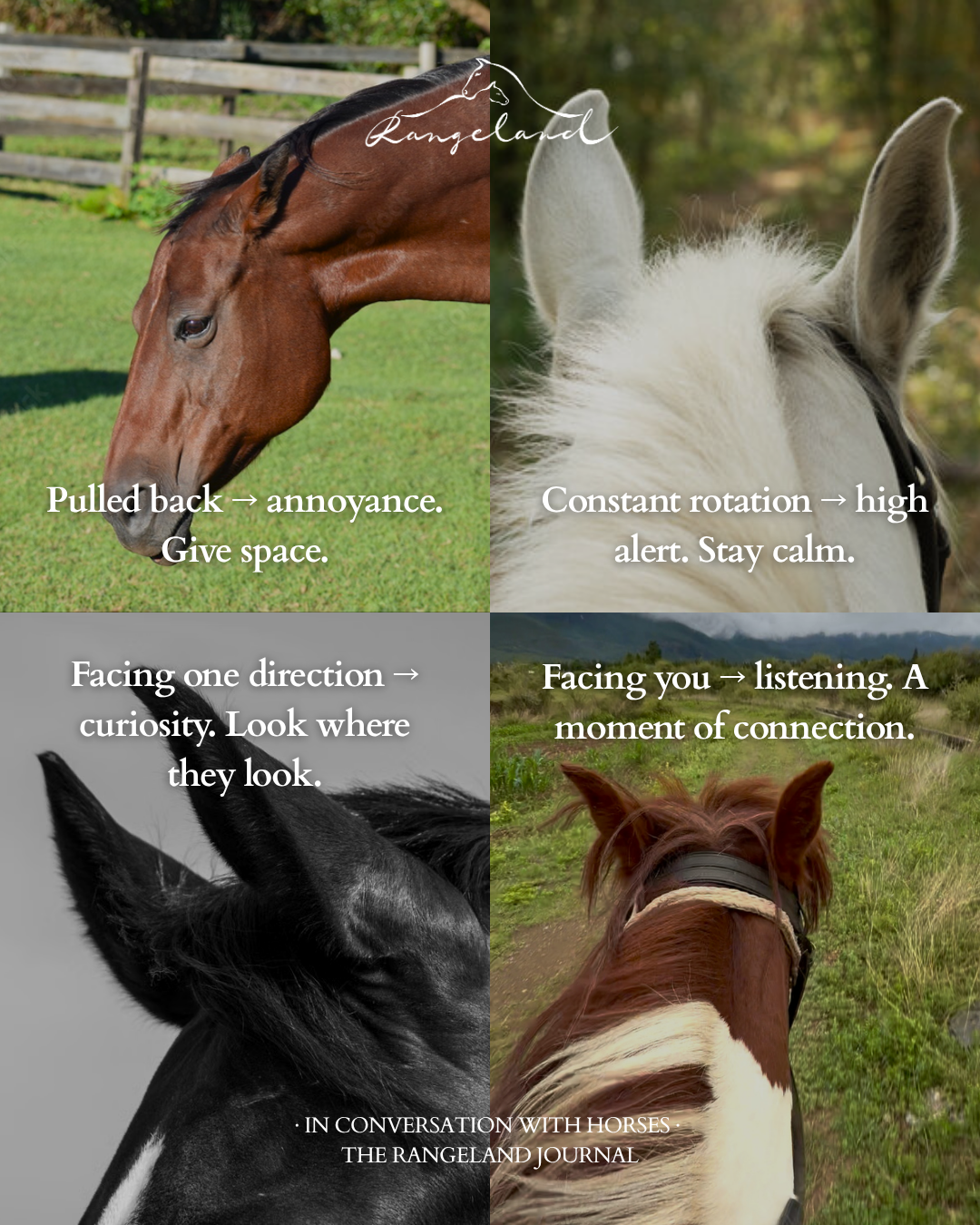
Horses communicate constantly, and much of that communication is silent. The ears are one of the most reliable indicators of a horse's emotional state. Learn to read them.
Pulled back and touching the back of the head: Annoyance or anger. Give the horse space and reassess.
Constant rotation: High alert. The horse is monitoring its environment. Stay calm and be aware of surroundings.
Facing one direction: Interest or curiosity. The horse is focused on something in that direction. Look where the horse is looking.
Facing you: Listening. The horse is attuned to you. This is a moment of connection—use it well.
A Final Thought
Every ride is an invitation. Every interaction is a conversation. Every moment with a horse is an opportunity to remember that we are not masters of the natural world, we are participants in it.
Before you ride, take a breath. Be kind. Be gentle. Be curious.
Become the kind of person a horse would choose to walk with.
Ready to meet your first horse? Contact us to learn more about our beginner-friendly rides.
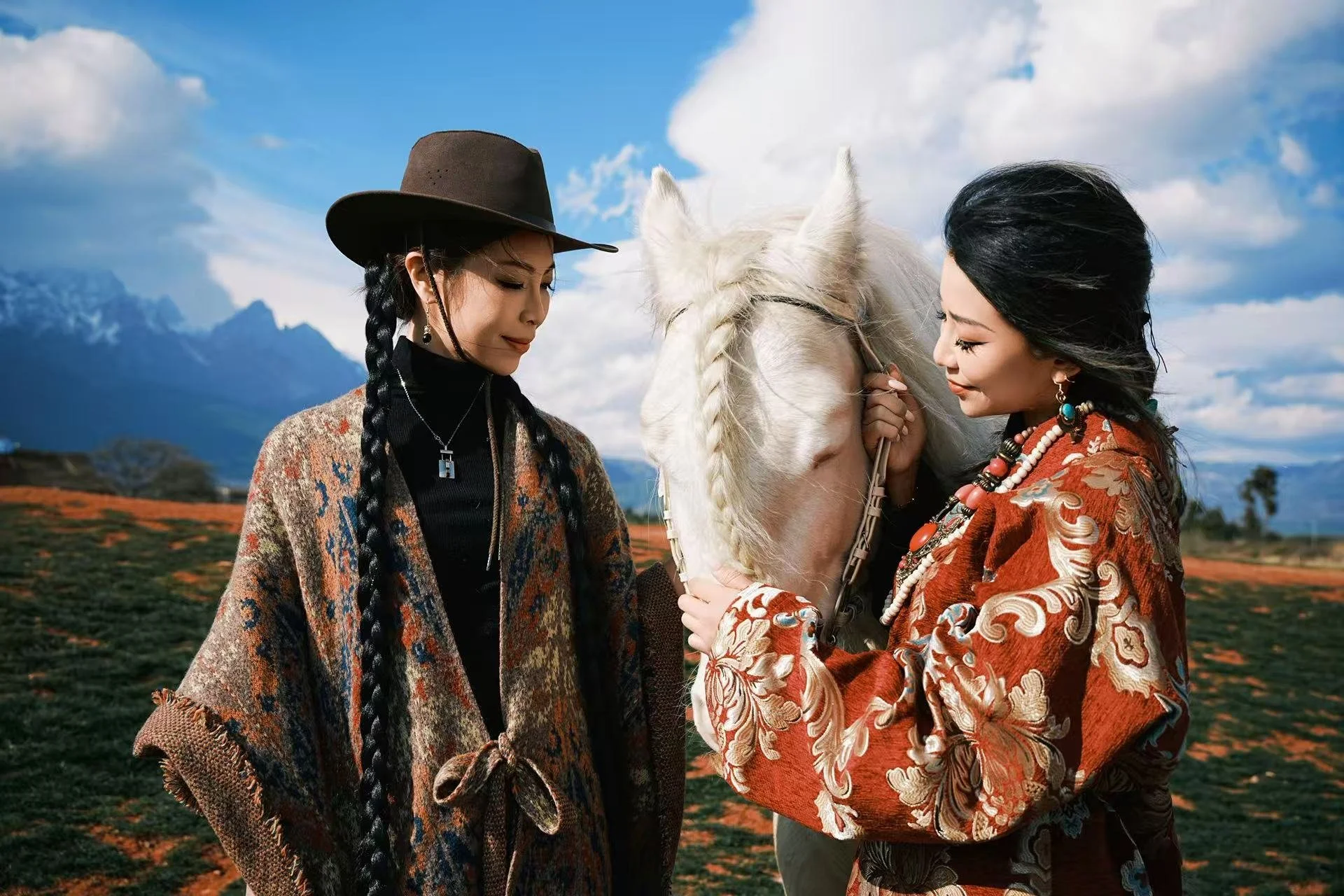
After trust is built, connection follows. Here, our riders share a quiet moment with one of our horse—a gentle reminder that the deepest bonds are formed not through force, but through mutual respect.
